
Fur Trade Series
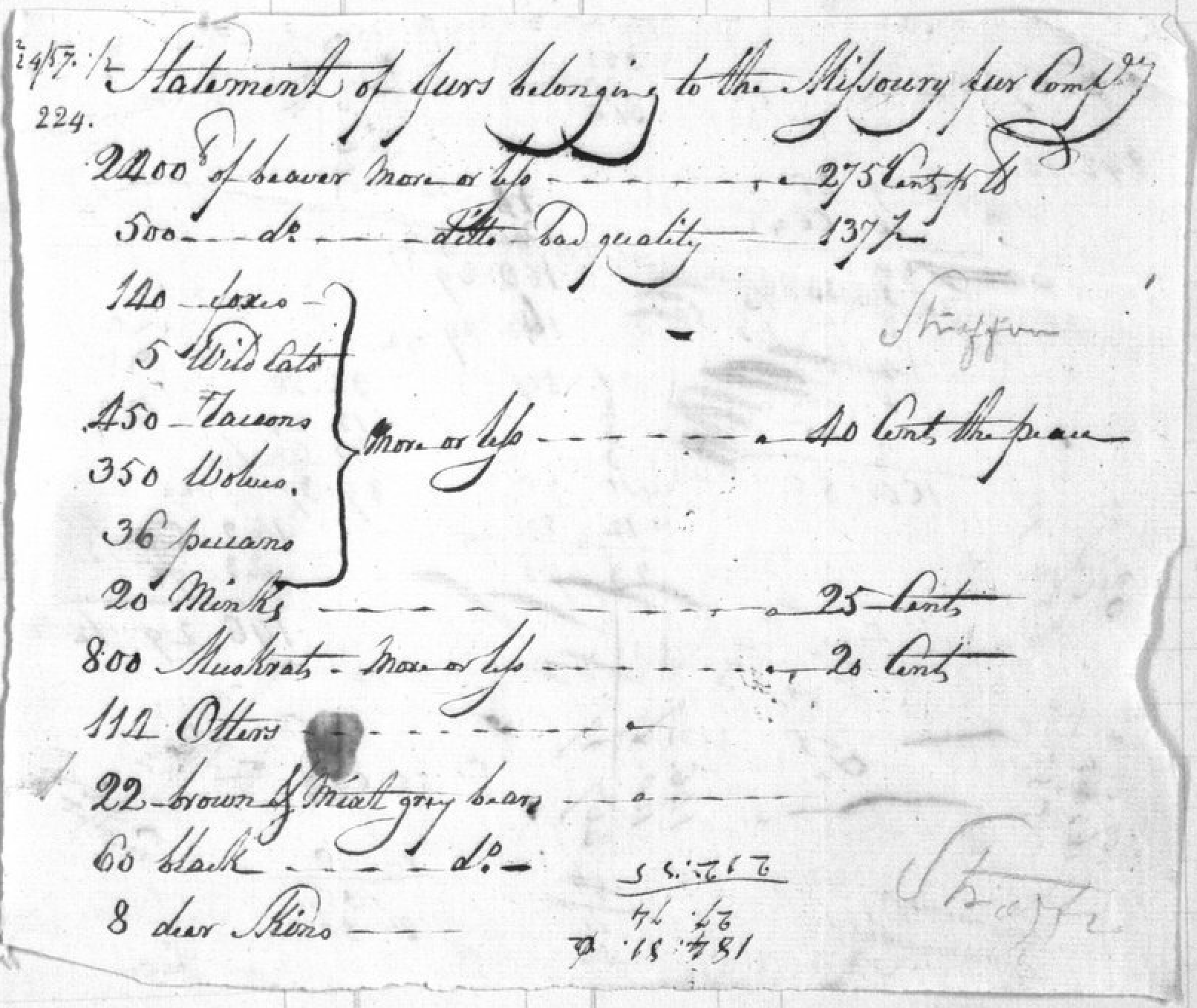
These case files consist of over 80 court actions that bring the international St. Louis fur trade to life. Fur trade proved to be one of the most profitable undertakings for the territorial entrepreneur. The abundance of animal pelts encouraged a number of colorful characters to move up and down the Mississippi Valley region, playing a key role in the settlement and development of the Upper Louisiana area. St. Louis dominated the Upper Louisiana fur trade; several successful companies, including the famous Missouri Fur Company of Manuel Lisa and partners, were in business there. Unique to the collection are a number of cases that reference Native American tribes and subsequent interaction with fur trades. The cases primarily involve trade disputes, many of which refer to various tribes living in or around the territory, and later state, of Missouri.
These records provide a unique, personal glimpse at the interaction between the traders and settlers and Native Americans, creating an additional resource for understanding the often-difficult relationship between the original inhabitants of the place that became Missouri and the French and Spanish colonists and American pioneers who came to trade and settle the land. In addition, the database includes a handful of criminal cases involving native tribes, and at least one freedom suit based on Indian ancestry.
The colonial French were interested in furs and the lucrative fur trade; it was a major impetus behind the rapid development of St. Louis. Indians provided the furs, so it was advantageous to maintain good relations. Many French fur trappers lived among the native tribes and intermarried. The Spanish attempted to continue this friendly policy, viewing the Indians as an economic asset. Under Spanish authority, from roughly 1763 to 1800, local commandants annually expended large sums of money to maintain friendly relations and win tribal allegiance.
In addition, the Spanish government passed laws to prevent native tribes from being exploited. It prohibited the practice of Indian slavery, common in the territory, and outlawed the trade of guns and alcohol to Indians. The Spanish government, however, was never able to afford and provide enough merchandise for Indian trade, forcing many tribes to ally with well-supplied British traders along the Mississippi River. This, in turn, made trade with Indians on the Missouri River increasingly important to traders in Upper Louisiana.
Trade with these tribes is documented in this series of court cases. The tribes referred to in the cases include many that lived along the lower Missouri River in the early nineteenth century, such as the Osage, Kansas, Cherokee, Delaware, Shawnee, Kickapoo, Sac, and Fox tribes. The Spanish government, suspicious of British and American expansionist policies, encouraged several of those tribes, native to the land east of the Mississippi River, to relocate to the territory as a barrier to possible — and inevitable — westward movement. The Shawnee and Delaware tribes relocated to southeast Missouri as a result.
| Title | Date Filed |
|---|