
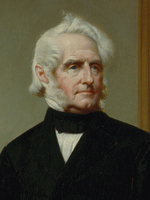
Hamilton Gamble served in the Missouri State Legislature from 1846-1851. He was elected to the Missouri Supreme Court as supreme justice where he presided over the Dred Scott v. Emerson case and dissented his colleagues’ vote to overturn the case. He believed Scott was free because he had already been free. Although Gamble believed Scott to be free, earlier in 1829 he defended Garland Rucker against Maria Whiten and her son Patrick Henry who were suing Rucker for their freedom. Gamble became the provisional governor of Missouri in 1861.
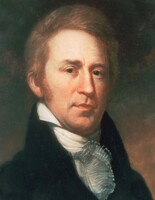
William Clark of the famed Lewis and Clark expedition is most well known as a frontier explorer but also held several other noted positions including Indian Agent, soldier, partner in the Missouri Fur Company, and the fourth governor of the Missouri Territory. Although Clark was himself an enslaver, he served as a next friend for two brothers, Anson and Michael, the sons of Matilda, so that they could gain their freedom.
Gustavus Adolphus Bird was the lawyer for many plaintiffs who pursued their freedom in court. He also served as the next friend for some freedom suit plaintiffs. Bird was one of a few lawyers known to willingly prosecute on behalf of enslaved people. While there is little information available about Bird, he clearly played a significant role in the freedom suits as an advocate for enslaved people.
Jenny Brown sued Frances Sturgis for her freedom in 1844 and won. She served as the next friend for her three children, Jim, Mary, and Stephen, and sued William Head for their freedom as well in 1844. The Brown children are an example of the many children who had freedom suits filed on their behalf by either their mothers or others who served as next friends for them.
Jean P. Cabanne was a prominent member of the St. Louis community in the early 1800s. Pelagie, who Cabanne had obtained from Antoine Soulard, sued Cabanne for her freedom. Francois LaGrange also filed a suit against Cabanne and others. Cabanne was one of the founders of the American Fur Company in St. Louis, a commissioner of the Bank of St. Louis, and one of the first members of the St. Louis Public Schools Board. Cabanne married Julia Gratiot, the daughter of Charles Gratiot. The Cabanne House in Forest Park is named after Cabanne, as well as Cabanne Street in St. Louis.
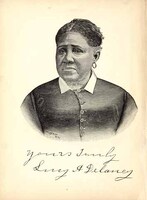
Lucy Ann Delaney (born Lucy Berry, aka Lucy Ann Britton) was the daughter of Polly Berry (aka Polly Wash). Both Lucy and Polly sued for and obtained their freedom. In 1891, Delaney published a memoir about her and her mother's experiences attempting to obtain their freedom. The memoir, titled From the Darkness Cometh the Light, or, Struggles for Freedom, is the only known first-person account from an enslaved person of the freedom suit experience.
Grace Dutton sued John Paca for her freedom and won. Dutton also sued Paca as the next friend for her three children, Andrew, Abraham, and Lemmon and obtained their freedom. Hamilton Gamble served as their lawyer.
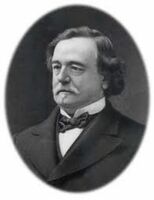
Dr. John Emerson was Dred Scott’s enslaver. Emerson was a military doctor who purchased Scott in St. Louis when he received his first assignment to be a doctor at Fort Armstrong, located off of the Mississippi River in northern Illinois. When Fort Armstrong no longer had need for a doctor, Emerson and Scott transferred to Fort Snelling in Minnesota, where Emerson and Scott first met Major Taliaferro and Harriett Robinson, whom Taliaferro enslaved. Dred Scott and Harriett Robinson eventually married, and Taliaferro transferred his claim over Harriet to Emerson. When Emerson was transferred to Louisiana, he allowed Scott and Harriett to remain at Fort Snelling. From then on, Dr. Emerson had little impact on their lives, however, once he died, his wife's family, the Sanfords, played a significant role against the Scotts' fight for freedom.
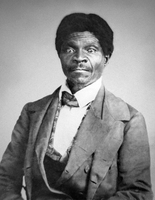
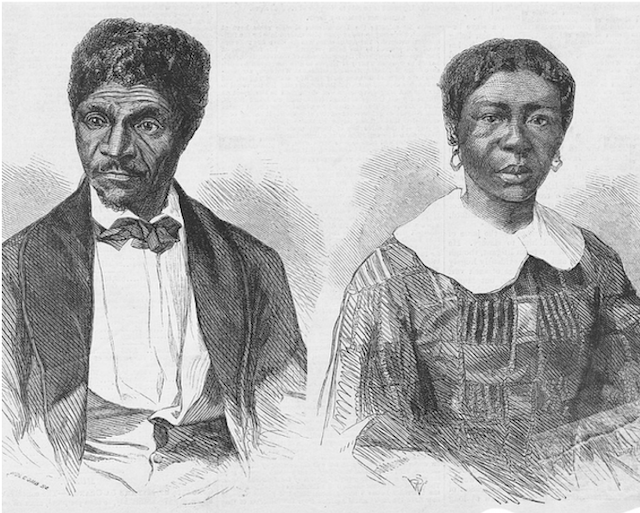
Dred Scott sued for his and his family's freedom in the 1857 case Dred Scott v. Sandford, whose conclusion that the Scotts were not free and no Black person was considered a U.S. citzen is known as 'The Dred Scott Decision.' For four decades leading up to this case, enslaved people could sue for their freedom and win due to the 'once free, always free’ concept. This applied to enslaved people who had spent some time in a free state, as Dred Scott and his wife Harriet had done. After they traveled south to St. Louis with their enslaver, Dr. John Emerson, they faced the uncertainty over their freedom and keeping their family together. When Emerson died, Scott first attempted to purchase his freedom, but Emerson's wife, Irene Sanford, refused. Scott sued and his case eventually reached the United States Supreme Court. Scott was never able to gain his freedom in court, but eventually Irene Sanford transferred the Scotts to Henry Taylor Blow, the son of Dred Scott’s enslaver before Emerson, who granted the family their freedom.
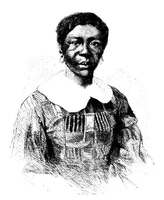
Harriet Robinson Scott was enslaved by Major Lawrence Taliaferro. When she was married to Dred Scott in the mid-1830s, Taliaferro transferred his claim over her to Dr. John Emerson. When Emerson died, the Scotts were bequeathed to Emerson's wife, Irene Emerson. The Scotts had two daughters, Eliza and Lizzie. In 1846, Harriet and Dred Scott went to court for their freedom. The case was eventually tried in the US Supreme Court as Dred Scott v. Sandford. The Scotts never gained their freedom in court. However, after her husband's death, Irene Emerson married Dr. Calvin Chaffee, who was against slavery. After Irene Emerson Chaffee’s brother died, Dr. Chaffee convinced her to transfer the Scotts to Taylor Blow, the son of Peter Blow, Dred Scott's enslaver before Dr. John Emerson. Blow then freed the Scott family.
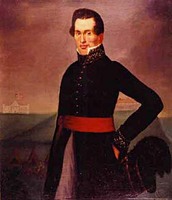
Lawrence Taliaferro enslaved Harriet Robinson Scott. Taliaferro allowed her to marry Dred Scott and served as the officiator of the union. Afterward, he transferred his claim over Harriet to John Emerson, so she could remain with her husband. Taliaferro worked at Fort Snelling, Minnesota from 1820-1839 as an Indian Agent who mediated between the American Fur Company traders, Ojibwa and Dakota Indians, and US interests.
Lawrence Taliaferro enslaved Harriet Robinson Scott. Taliaferro allowed her to marry Dred Scott and served as the officiator of the union. Afterward, he transferred his claim over Harriet to John Emerson, so she could remain with her husband. Taliaferro worked at Fort Snelling, Minnesota from 1820-1839 as an Indian Agent who mediated between the American Fur Company traders, Ojibwa and Dakota Indians, and US interests.