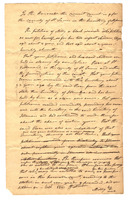
-
Title
-
Freedom Suits Case Files, 1814-1860
-
Description
-
These case files consist of 301 legal petitions for freedom by people of color originally filed in St. Louis courts between 1814 and 1860. They make up the largest corpus of freedom suits currently available to researchers in the United States.
-
Abstract
-
These case files consist of 301 legal petitions for freedom by people of color originally filed in St. Louis courts between 1814 and 1860. They make up the largest corpus of freedom suits currently available to researchers in the United States. Accretions may occur as additional document processing and identification is completed. Earlier cases were filed directly with Territorial Supreme Court.
-
Volume
-
3 cubic feet
-
Provenance
-
St. Louis Circuit Court, Office of the Circuit Clerk
The suits described in this finding aid were brought by or on behalf of persons of color held in slavery within the St. Louis area from 1814 to 1860. These case files remain part of the larger St. Louis Circuit Court Case File Records Series and are presented here as an artificial, subject-oriented records series to facilitate research in a distinctive area of national, regional, and local history.
All records were created in the course of business by the Circuit Court, its inferior courts, and predecessors as provided for by federal and state law. Upon the separation of St. Louis City and St. Louis County as provided for in the 1875 constitution, the city retained custody of all court records previously produced. These records have remained in the custody of the St. Louis Circuit Court since that time, both in the historic Old Courthouse (constructed 1839-1852) and the Civil Courts Building (constructed in 1930). The records are now housed at the Missouri State Archives-St. Louis.
-
Historical/Biographical Note
-
The St. Louis freedom suits, and other records like them, are a resource that shed new light on the complex history of slavery. Included in many cases are depositions, which can serve as rare "oral histories," which document plaintiffs’ family, travel, work, and interaction with both enslavers and advocates of their freedom. Of particular note is the role of women in these suits, as the examples below will attest. Individually, and as a whole, these cases demonstrate the determination of enslaved people to free themselves.
The case of Winny v. Phebe Whitesides is significant in that it was the first freedom suit appealed to the Missouri Supreme Court. It established the precedent of freeing enslaved people who had resided in a free territory or state. Citing the 1807 territorial statute that allowed any person held in slavery to petition the court to sue for their freedom as a poor person, Winny filed a petition in 1819 charging Whitesides with trespass, assault and battery, and false imprisonment (the language of the charge was specific to the statute). Winny declared that because Whitesides had taken her and her family from North Carolina into Illinois before coming to St. Louis, she should be free. On February 13, 1822, a jury agreed and declared Winny and her offspring free persons. The defendant appealed the case to the Missouri Supreme Court, which upheld the verdict, based on the terms of the Northwest Ordinance.
Although it was not unusual for a case to drag on for several years, one family’s struggle lasted three decades. In 1805, the children of Marie Jean Scypion, an enslaved woman of African and Indigenous American heritage filed the first suit for freedom in Missouri with the Territorial Superior Court. Enslavement of Indigenous people was common in territorial Missouri until Spanish officials ordered an end to the practice in 1769, although the law was not consistently enforced. Enslavers resisted the order, but some enslaved people, including Scypion’s descendants, saw in it a chance for freedom. Scypion's children asserted in their petition that Marie Jean’s mother was Indian, and that ancestry, the plaintiffs argued, precluded their enslavement. The initial judgment in their favor was reversed in a later trial and over the next thirty years, Scypion’s descendants, most notably her daughters Marguerite, Celeste, and Catiche continued to press their claim.
Encouraged by the Missouri General Assembly's passage of a state statute allowing persons held in slavery to sue for their freedom, Marguerite renewed her claim in 1825 and filed suit against her enslaver Pierre Chouteau, Sr., in the St. Louis Circuit Court. Although the judgment and subsequent appeal to the Missouri Supreme Court went against Marguerite, her attorney’s persistence brought about a review of the case in 1834 and a new trial was ordered. After a change of venue to St. Charles County, and then Jefferson County, and delays on the part of Chouteau's legal counsel, the case finally came to trial on November 8, 1836 (The November 8, 1836, trial involving the Scypion descendants took place in Jefferson County. The complete case files for all of the proceedings, including the earlier ones in St. Louis, can be found in Files 273 and 274 of the Jefferson County Circuit Court records in Hillsboro.) The jury’s unanimous decision in favor of the plaintiffs withstood appeals by the defense to the State and U.S. Supreme Courts. This case is considered the official end to the practice of enslaving Indigenous people in Missouri by establishing evidence of Indigenous ancestry as a pathway to proving free status.
Under Missouri law, neither enslaved people nor minor children could sue on their own. Instead, a "next friend," usually a family member or trusted ally, voluntarily acted on behalf of an enslaved person or minor, and brought suit in their name when the law denied them the capacity to sue independently. For example, in the case of Josephine LaCourse, her mother Julia, who was legally recognized as free, sued her enslaver enslaver George Mitchell on her daughter's behalf. The basis of this 1835 suit was prior residence in free territory and upon Josephine LaCourse's birth in “the French Village of St. Clair,” Illinois, in 1826.
Children of the founding fathers of St. Louis were plaintiffs and defendants in numerous freedom suits. Enslaved people filed petitions against the Chouteau, Cabanne, Sarpy, and Papin families, among others. Most notably, in the 1840s, siblings Charlotte and Pierre brought separate and parallel suits for freedom against Therese and Gabriel Chouteau. The siblings alleged that their mother, Rose, was born in Canada at a time when slavery in that country was prohibited. Oddly, the courts ruled in favor of Pierre's petition for freedom but turned down his sister Charlotte's plea.
The most well-known and the freedom suit with the greatest impact on U. S. history, culture, and society was the one filed in St. Louis Circuit Court by Dred Scott and his wife Harriet, in 1846. Although the St. Louis jury granted freedom to the Scotts, a series of appeals by both parties brought the case before the U. S. Supreme Court in 1857. The U.S. Supreme Court infamously held that all African descendants – slave or free -- were not U.S. citizens and accordingly, the Scotts had no standing to sue for freedom. It also ruled that the Missouri Compromise of 1820, which had excluded slavery in the northern territories of the Louisiana Purchase and validated the “once free, always free” precedent, was itself unconstitutional. The Dred Scott decision fueled the ongoing debate over slavery and is among the sequence of significant events that led to the Civil War.
-
Scope and Content
-
These case files consist of over 300 legal petitions for freedom filed by people of color in St. Louis courts between 1814 and 1860. The bulk of these suits were filed between 1820 and 1850.
Case files may include the following documents: petitions filed by attorneys to be granted authority or permission for the individual person of color to bring suit for freedom, affidavits, summonses of witnesses required to support or refute the validity of the suit, writs, replications, depositions of witnesses, motions, bills of sale, lists of slaves sold, deeds of emancipation, wills, orders for sale, land grants, instructions to juries, jury verdicts, appeals, and copies of Missouri Supreme Court decisions.
-
Physical Description
-
Case files may consist of the following: hand-written documents or document fragments; preprinted summonses with handwritten entries; and newspaper clippings or advertisements. The contents of each tri-folded case file have been flattened and cleaned of dirt and coal dust that accumulated through the years. Items used to attach documents, such as straight pins, ribbons, wax, thread and starch wafers have been removed to allow for filming and scanning. Due to age, environment, use and paper type, many of the documents have sustained damage over the years and are very fragile and have been placed in protective polyester sleeves. Selected documents will receive additional conservation treatment. All case files have been housed in archival folders and boxes.
-
Arrangement
-
All circuit court case files are arranged in chronological order by Year, Term of Court, and Case Number, as assigned by the clerk of court. Documents within each case file are arranged chronologically by date filed with the court. These case files retain their original placement within the Circuit Case File series. This artificial series was digitally scanned retaining that original order.
-
Separated Material
-
Oversized records were removed from the case files to permit flattening, provide proper safe storage and handling, and access. References to the separated material have been placed in each folder from which documents have been removed.
The Missouri Historical Society has in its collection, some case files and other records from the St. Louis Circuit Court that may relate to these case files. (Box list, Saint Louis (Mo.). Circuit Court Records, 1804-1967, Missouri Historical Society, St. Louis.)
Any additional gaps that occur in the records series are due to misfile, loss or damage.
-
Finding Aids
-
This keyword-searchable database facilitates locating specific cases or subjects in the Freedom Suit case files.
The original court indexes provide direct access to plaintiffs, defendants, year, term and case file number.
-
Court Indexes
-
Related Materials
-
As previously noted, the Freedom Suit case files are part of the larger St. Louis Circuit Court Case File Series. There are additional cases within those records that may relate to persons, places or events mentioned within these suits.
Researchers should also consult other related record series for complementary information.
-
Related Records
-
Approximately 65 freedom suits were originally filed in or appealed to the Territorial Superior Court or the Missouri Supreme Court, including 38 from St. Louis. These cases are available at the Missouri State Archives.
-
Access Conditions
-
Original records remain in the legal custody of the St. Louis Circuit Court. Researchers may apply for access by contacting:
Missouri State Archives-St. Louis
Carnahan Courthouse
1114 Market Street
Room 245
St. Louis, MO 63101
Phone: (314) 588-1746
E-mail: archrefstl@sos.mo.gov
Hours: 8 a.m. to 5 p.m. Monday through Friday, call ahead to ensure staff availability. Closed on all Federal and State holidays.
The Missouri State Archives-St. Louis determines policies and prices for copies of original documents.
-
Preferred Citation
-
The Missouri State Archives, the St. Louis Circuit Court Clerk's Office, and the American Culture Studies Program in Arts & Sciences at Washington University in St. Louis have created this digital collection for noncommercial, educational, and research purposes. All references to the materials on this website should be cited as follows:
Plaintiff v. Defendant
Term of Court, Year
Case File Number
(Cite specific document if required)
Circuit Court Case Files
Office of the Circuit Clerk-St. Louis
Missouri State Archives-St. Louis
Office of the Secretary of State
[(Date Accessed), https://digitalexhibits.library.wustl.edu/s/ccr/]
-
Is Part Of
-
United States Supreme Court Case, 1854-1856

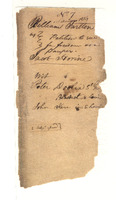 William Tarlton v. Jacob Horine Freedom Suits
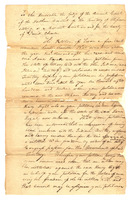 Susan, a free woman of color v. Henry Hight Freedom Suits
 Tempe, a black woman v. Risden H. Price Freedom Suits
 Labon, a man of color v. Risdon H. Price Freedom Suits
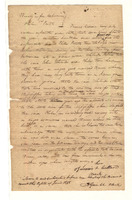 Winny v. Phebe Whitesides (alias Pruitt) Freedom Suits
 Sarah v. Michael Halton Freedom Suits
 Daniel v. John Whitesides Freedom Suits
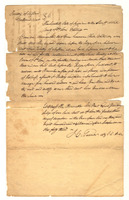 Hannah, a free girl v. Phebe Whitesides Freedom Suits
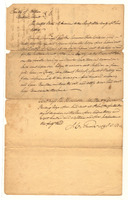 Malinda v. Phebe Whitesides Freedom Suits
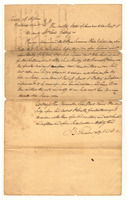 Lewis v. Phebe Whitesides Freedom Suits
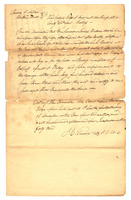 Jenny v. Charles Halton Freedom Suits
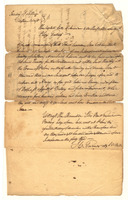 Nancy v. Isaac Voteau Freedom Suits
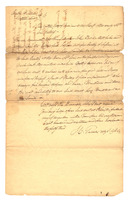 Lydia v. John Butler Freedom Suits
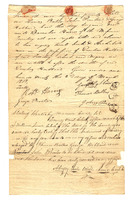 Jack v. Barnabas Harris Freedom Suits
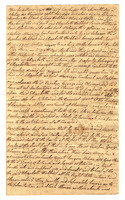 Arch v. Barnabas Harris Freedom Suits
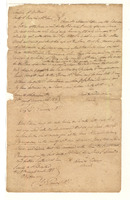 Marie, a mulatto girl v. Auguste Chouteau Freedom Suits
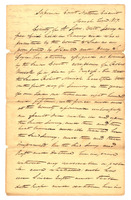 Jenny v. Robert Musick Freedom Suits
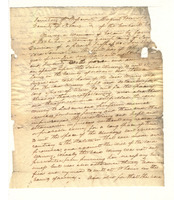 Winny, a woman of color v. Samuel Donner Freedom Suits